
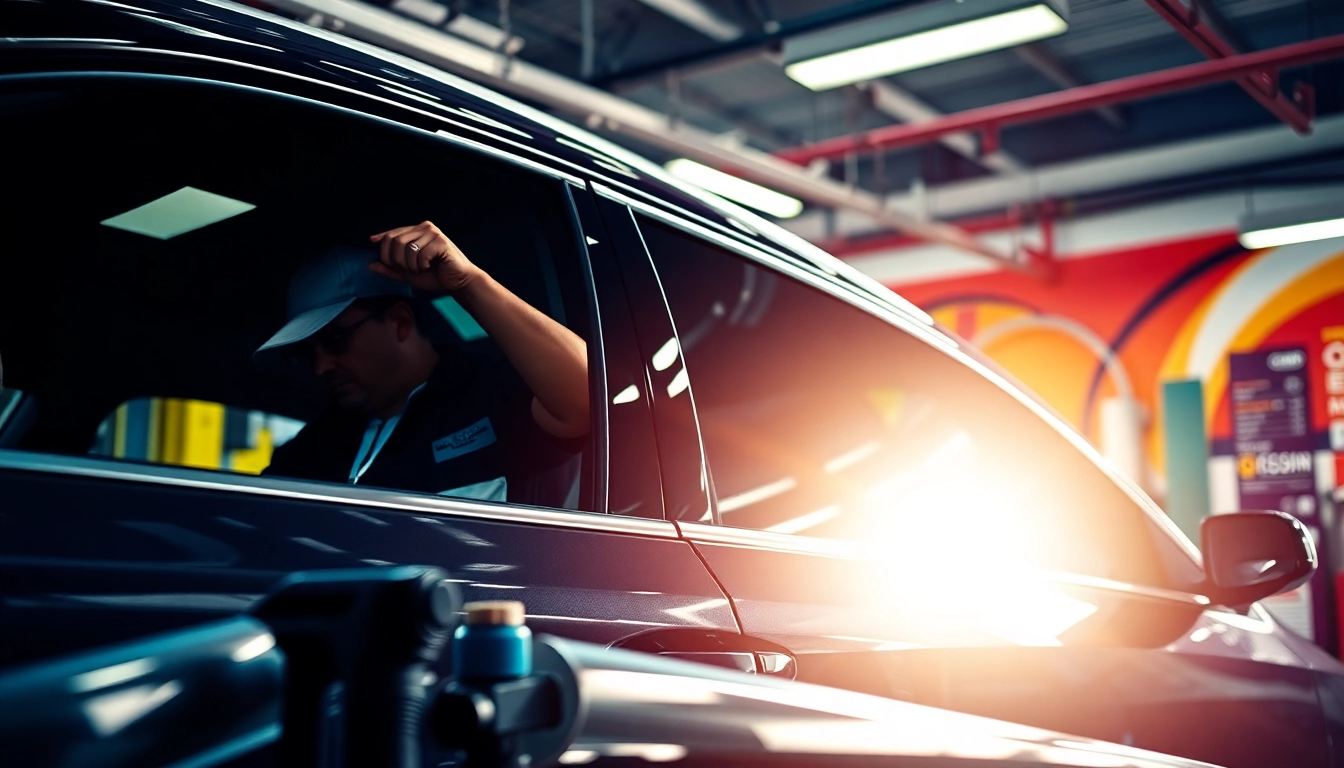
Understanding Auto Window Tint
What is Auto Window Tint?
Auto window tint is a thin layer of tinted film applied to the windows of vehicles. This film is made from various materials, including polyester and dye, and is designed to reduce the amount of visible light and UV rays that enter your car. The primary purpose of auto window tinting is to enhance privacy, improve comfort by reducing heat, and protect the vehicle’s interior from degradation due to sun exposure. Automotive window tinting can be customized in terms of darkness, material type, and application method, ensuring that each vehicle meets the owner’s needs.
Benefits of Auto Window Tint Near Me
Choosing auto window tint near me provides a multitude of benefits. One major advantage is temperature control; tinted windows can significantly lower the car’s interior temperature, making it more comfortable during hot weather. This also leads to improved fuel efficiency as the air conditioning does not have to work as hard. Additionally, auto window tint serves as a safeguard against harmful UV rays, protecting passengers from skin damage and reducing fading of interior fabrics. Enhanced privacy is another benefit, as well as protection against shattered glass in the event of an accident, providing an additional layer of safety.
How Auto Window Tint Works
Auto window tint operates through its ability to reflect, absorb, and filter sunlight. The film consists of various layers, all designed to manage light differently. Some films are reflective, which means they deflect sunlight away from the vehicle, while others are primarily designed to absorb and dissipate heat. Depending on the type and quality of tint being used, it can block up to 99% of harmful UV rays while allowing visible light to pass through to varying degrees. Moreover, advanced ceramic films are available that provide excellent heat rejection without altering the appearance significantly.
Choosing the Right Tint
Types of Window Tints Available
When considering window tints for your vehicle, you can choose from several types:
- Dyed Window Film: This film blocks heat and blocks UV rays. It is affordable and provides a low-glare option but may fade over time.
- Metalized Window Film: Known for its durability, this film reflects heat and UV rays while also strengthening windows. However, it may interfere with GPS and mobile signals.
- Carbon Window Film: A more expensive option, it does not fade and offers better heat rejection without looking shiny.
- Ceramic Window Film: The most advanced option, it blocks heat and UV rays without interference with electrical signals, providing clear visibility and durability.
How to Select the Best Tint for Your Vehicle
Choosing the best tint for your vehicle involves considering several factors, including your budget, the climate you live in, and the specific purpose of the tint. If you live in a hot climate, opt for a film with high heat-rejection capabilities. For aesthetic purposes, you may prefer darker shades for added privacy but ensure they comply with local laws. Researching the brands available in your area and seeking certified professionals for recommendations can also help in making an informed choice.
Factors to Consider When Tinting
There are a few critical factors to consider when choosing window tint:
- Opacity: Different tints offer varying degrees of opacity. Consider the legality of darkness level in your region.
- Material Quality: Higher-end films tend to be more durable and efficient, reflecting the initial higher investment.
- Warranty: Ensure that the tint comes with a warranty that covers bubbling, peeling, and discoloration.
Installation Process
Professional Installation vs. DIY
While some vehicle owners may consider DIY window tinting as a cost-saving measure, professional installation is often recommended for optimal results. Professionals have equipment and experience that significantly reduce the chances of improper application, which can lead to bubbling, creasing, or peeling. However, for those who are handy, DIY kits are available, but they require thorough research and preparation.
Steps for Professional Tint Installation
The professional installation process generally includes the following steps:
- Cleaning: The windows need to be cleaned to remove any dirt, dust, or residue.
- Measuring: Exact measurements of the windows are taken to cut the tint film accurately.
- Application: The film is applied starting from the top of the window and is smoothed out to remove air bubbles.
- Drying: After application, the film needs time to set and dry properly.
Tips for a Successful DIY Tinting
If you decide to take on the DIY project, consider these tips for a successful application:
- Use a high-quality window film.
- Take your time during measurement and cutting to ensure a perfect fit.
- Keep your working area free from dust and wind to prevent particles from getting trapped.
- Prepare your windows thoroughly by cleaning them several times before application.
Legal Considerations for Window Tint
Understanding Tinting Laws by State
Window tinting laws vary significantly from state to state, with some areas having strict regulations on how dark or reflective the tints can be. It’s essential to familiarize yourself with your local laws before applying window tint to avoid penalties. Most states specify limits on VLT (Visible Light Transmission), which indicates how much light can pass through the film.
How to Comply with Regulations
To comply with state regulations, always check local laws before selecting your window tint. Consider having your chosen tint professionally installed, as they are often familiar with the regulations and can guide you to choose compliant products. Additionally, keeping documentation that demonstrates compliance can help in case of a legal query.
Penalties for Non-Compliance
Non-compliance with tinting laws can result in fines, penalties, and, in some cases, the requirement to remove the tint. Fines can vary significantly based on location and can accumulate quickly if the issue isn’t resolved promptly. It’s prudent to educate oneself to avoid costly mistakes.
Maintenance and Care for Tints
How to Care for Your Window Tint
Proper maintenance of your window tint involves regular cleaning with non-abrasive materials. Avoid using ammonia-based products as they can degrade the tint’s material. Instead, a simple solution of mild soap and water is recommended. Additionally, allow the tint to cure for at least a week before using window cleaners to avoid damaging it.
Common Issues and Solutions
Some common issues with window tints include bubbling, peeling, and fading. Bubbling often occurs due to improper installation or not allowing the film to cure properly. Should bubbles appear, they can often be fixed by gently pushing them out or using a pin to release the trapped air. Peeling can occur due to prolonged exposure to heat; this may require reapplication if not remedied quickly. Discoloration or fading indicates lower-quality film, and in such cases, replacement may be necessary.
When to Replace Your Window Tint
It’s time to consider replacing your window tint if you notice significant fading, bubbles that cannot be fixed, or peeling edges. A good quality tint should last several years, but exposure to harsh environmental factors can shorten its lifespan. Regular inspection can help identify these issues early, ensuring your vehicle always looks its best.
Frequently Asked Questions (FAQs)
1. How long does window tint last?
Window tint can last anywhere from 5 to 15 years depending on the quality of the film and how well it is maintained.
2. Can I wash my car after tinting?
It’s best to wait at least a week before washing your car to ensure the tint has properly cured and adhered.
3. Does window tint block UV rays?
Yes, most window tints can block up to 99% of harmful UV rays, providing sun protection for passengers and minimizing interior fading.
4. Will window tint affect visibility at night?
High-quality window tints are designed to reduce glare while maintaining good visibility at night, but darker tints may make it more challenging.
5. Is DIY tinting effective?
DIY tinting can be effective if done carefully; however, it typically lacks the precision and quality of professional installations.